NBA Infinite - PvP Basketball
- 3.8
- Rating
- 10.00M
- Installs
- Free
- Price

 Analysis by App-foxy
I went into NBA Infinite - PvP Basketball expecting a quick sports game built around short competitive sessions, and that is where it makes the most sense. It is a free basketball game from Level Infinite for Android, aimed at players who want to take a team onto the court rather than manage a quiet single-player career. The focus is clearly on competition, roster building, and playing with or against other people, so the experience feels more like a portable match-day game than a traditional offline basketball title.
After spending time with it, my main impression is that the game is easy to approach but not especially lightweight in the way it asks for attention. The controls and match format are designed to get you playing quickly, yet the competitive side gives you plenty to think about once the basic moves become familiar. That combination works well for a short break, although it also means the game is less suitable if you want a calm, completely casual sports app.
How NBA Infinite feels during ordinary play
The first thing I noticed is the difference between starting a match and improving at the game. Getting into the action is straightforward, but making good decisions under pressure takes more practice. Basketball leaves little room for careless movement: a rushed pass, a poorly timed shot, or an overconfident defensive move can change possession immediately. I found myself paying more attention to spacing and timing after the novelty of simply shooting wore off.
You May Also Like

 Google Keep - Notes and lists
Google Keep’s Quiet Growth Shows the Appeal of Simpler Notes
As mobile work gets busier, Google Keep keeps winning a simple contest: capture a thought quickly, find it later, and get on with the day.

 Blood Strike: 2.5 Anniversary
Blood Strike’s Loadouts Turn Every Drop Into a Tactical Gamble
A close look at Blood Strike’s custom loadouts: how fast access to signature weapons reshapes its battle royale rhythm, rewards preparation, and narrows the gap between fights.

 Pandora - Music & Podcasts
Pandora’s Music Is Easy to Start, but Harder to Recover
Pandora’s strength is its low-effort path from a seed to a station. Its weak spot is how much confidence it asks you to place in connection, setup, and quiet recovery.

 8 Ball Pool
 Is Built on Rivalries, Rematches, and Routine
A close look at the rivalries, rematches, shared routines, and unanswered safety questions that turn a quick pool match into a persistent mobile community.

 Samsung Music
’s Quiet Strength Is Playing What You Already Own
Its reach comes less from spectacle than from dependable access to a personal library. That simplicity is both the app’s strongest retention engine and its ceiling.

 AccuWeather: Weather Radar
AccuWeather Review: A Quick, Clear Forecast for Everyday Decisions
For everyday plans, the best forecast is the one you can understand quickly. AccuWeather makes rain timing, radar, and local conditions easy to act on, with a few trade-offs.
More From Our News Desk



That learning curve is useful because it gives the game some staying power. If every match were decided by tapping the obvious option, the roster-building side would feel pointless. Instead, the appeal comes from combining the players available to you with your own decisions. A stronger roster may help, but it does not remove the need to read the court. The best results come from treating the roster as a tool, not as a substitute for timing.
The game is listed in the sports category and carries an Everyone content rating, which makes it broadly approachable from a subject-matter perspective. I would still describe the competitive format as more demanding than the age label suggests. Younger players can understand the basics, but anyone who wants to progress consistently will need patience, especially when facing people who already know how to control space and punish mistakes.
One practical strength is the flexibility of the match concept. I can imagine opening it during a commute, before an appointment, or in the evening when I want something more active than scrolling. It does not require the same long commitment as a full console basketball session. At the same time, a close match can be difficult to stop thinking about, particularly when a loss feels caused by one avoidable decision.
Speed expectations: quick entry, slower mastery
NBA Infinite feels designed around getting from the menu to the court without making the player study a complicated simulation first. That helps the game feel inviting when I only have a few minutes. The early experience is more about learning the rhythm of basketball than memorizing a large rulebook, and that is a sensible choice for a mobile audience.
There is a trade-off, though. Quick access does not mean every session feels equally quick. Competitive matches demand concentration, and roster decisions can turn a short play session into a longer one once I start checking what to improve next. The game encourages a loop of playing, evaluating, and returning to the team, which is effective but can make it harder to keep the experience strictly casual.
For a smoother start, I recommend resisting the urge to change everything after one disappointing match. I had better results when I identified one problem at a time: missed shots, poor defensive positioning, or wasting possessions. That approach makes progress easier to judge and prevents the roster screen from becoming a distraction from actual play.
Another useful habit is to use early matches to learn how each player feels rather than judging everyone only by their apparent strength. A player who suits your timing and movement may be more valuable in practice than a supposedly better option that does not fit your style. This is one of the less obvious parts of the game: the ideal roster is partly personal, because control comfort matters as much as a number on a card or profile.
Heavy-use moments: where the phone has more work to do
The heaviest moments are likely to come when several demands meet: active play, online competition, detailed visual presentation, and the ongoing roster-management loop. I would not treat it like a tiny arcade download that can be expected to behave identically on every phone. The minimum operating-system requirement is Android 5.0, but that requirement alone does not tell me how comfortably every compatible device will handle a modern 3D sports game.
On an older or modest phone, I would be realistic about expectations. A device may meet the operating-system requirement and still offer a less comfortable experience than a newer model. Heat, battery use, and interruptions become more noticeable during longer sessions, especially when the game is being played repeatedly rather than opened for one brief match. I would start with shorter sessions and pay attention to whether the phone remains comfortable before committing to extended play.
Players should also remember that competitive games are sensitive to inconsistency. A small pause or a delayed response matters more during a defensive possession than it does while browsing menus. That makes device condition part of the experience. Closing unnecessary background activity, keeping enough free storage for normal app operation, and avoiding play when the phone is already hot are sensible precautions, even though they cannot turn an older device into a new one.
Resource demands are also about the player, not only the hardware. A match can be visually engaging while still requiring constant attention. If I am tired or distracted, I make more mistakes and enjoy the game less. For that reason, I prefer it as a focused break rather than something to play while watching another video or carrying on a conversation.
Reliability and recovery after interruptions
Reliability matters more here than in a purely offline sports game because the competitive value depends on a stable session. My practical advice is to avoid starting an important match when the phone has an unstable connection, low battery, or several demanding apps competing for attention. That is not a criticism unique to this title; it is simply more visible when every possession affects the result.
The recovery question is equally important. If an interruption occurs, the frustration is not limited to reopening the game. There may be a match state, a missed opportunity, or a feeling that the result no longer reflects how I was playing. I therefore see the game as better suited to moments when I can give it uninterrupted attention. A five-minute window between tasks may be enough for a casual activity, but it is not always the best setting for a serious competitive match.
I also recommend treating progress as something to build steadily rather than something to force in one sitting. If a session goes badly, stepping away is often more useful than immediately spending resources or changing the entire roster. This is a meaningful recovery strategy because it protects both decision-making and enjoyment. Mobile competition can encourage impulsive reactions, and NBA Infinite is more rewarding when I make changes based on repeated patterns rather than one frustrating result.
The game’s current version is 1.18194.5903.0, so players should expect the installed experience to be tied to an actively maintained version rather than an old static release. I would still keep the app updated through the normal store process, particularly for a title where compatibility and online play matter. The game first appeared on February 17, 2024, which places it in a relatively modern mobile sports context without making it feel like a legacy title.
Device constraints and the cost of trying it
The financial barrier is low because the game is free to download and play. That makes it easy to test whether the controls, match pace, and competitive pressure suit you before deciding how much time to invest. The important qualification is that in-app purchases range from $0.29 to $99.99 per item. I would approach that range carefully and decide in advance whether I am comfortable spending anything.
For me, the best way to evaluate the game is to play without assuming that buying something will solve every weakness. If my problem is late defensive movement, a purchase will not teach me better timing. If I am still unsure whether I enjoy the match structure, spending money early makes the decision harder rather than easier. The free entry point is a genuine advantage, but the purchase range means families should use sensible spending controls, especially because the Everyone rating describes the content rather than a personal budget.
The installation footprint and actual hardware demand can vary by device and version, so I would leave comfortable storage space instead of treating the download as the only resource requirement. This is especially relevant for people using older phones with crowded storage. A game that technically installs may still be less pleasant if the device is already struggling with space, heat, or background processes.
Android users should also check that their phone runs at least Android 5.0. That is a low compatibility floor, but it should not be mistaken for a promise of identical performance across all supported devices. If you use an older handset, I would test the game during a short session before building a daily routine around it. If you use a recent phone, the more important question is likely to be whether you enjoy the competitive loop and the spending model.
What the large player base means for a newcomer
The game has passed ten million installs, with an average rating of 3.9 from around forty-four thousand ratings and roughly two and a half thousand written reviews. Those figures suggest that NBA Infinite has attracted a substantial audience, but they also tell me not to expect universal agreement. A broad player base can make a competitive game feel active, while the rating reminds me that the experience will not satisfy everyone.
For a new player, the size of the audience is both encouraging and intimidating. There is a reason to learn the systems because the game is not an empty experiment with no visible community interest. On the other hand, established players may already understand matchups and movement better than someone opening the game for the first time. I would judge the first few sessions by whether the game teaches me enough to improve, not by whether I win immediately.
A useful newcomer workflow is to separate learning from competing seriously. First, concentrate on basic movement and decision-making. Then notice which situations repeatedly cause trouble. Only after that would I spend time refining the roster. This order prevents a common mistake: assuming that a new player or upgrade will fix a tactical problem that actually comes from poor positioning.
Who should play it, and who should skip it
I would recommend NBA Infinite to someone who enjoys basketball but wants a mobile format with a competitive edge. It is particularly suitable for players who like building a team gradually, testing different approaches, and learning from close matches. Friends who enjoy comparing progress or challenging each other may also find more value here than in a basketball game designed only around solo scoring.
It is less suitable for someone seeking a fully offline experience, a relaxed game with no pressure, or a traditional management simulator where tactics matter more than direct play. It may also disappoint players who want every match to feel equally fair from the first minute. Competitive mobile games naturally create a gap between beginners and experienced users, and this title asks you to accept that learning process.
I would also suggest skipping it if you dislike in-app purchase systems on principle. The free price is helpful, but the presence of individual purchases reaching $99.99 means the commercial side is not something to ignore. Players who prefer a single upfront purchase or a completely unrestricted offline game will probably be happier with a different basketball option.
How it compares with other mobile basketball choices
Compared with a simple arcade basketball game, this one asks for more commitment. An arcade alternative may be better when I want instant scoring, minimal menus, and no interest in developing a roster. NBA Infinite offers a deeper reason to return, but that depth comes with more decisions and more pressure to understand how the team fits together.
Compared with a management-focused basketball game, it places more importance on what happens during the match itself. I cannot rely only on lineup planning or long-term statistics; my control and judgment remain central. That makes it a stronger choice for someone who wants to feel involved in possessions, while a management fan may prefer an experience where the front office is the main attraction.
Compared with a large console-style basketball simulation, the mobile format is easier to fit into everyday life, but I would not approach it expecting the same kind of presentation or long-form sports career. Its appeal is convenience and competitive accessibility, not replacing every feature of a full console release. That distinction helped me enjoy it more because I judged it as a focused mobile game rather than a complete living-room simulation.
My performance verdict after weighing the trade-offs
My final view is positive, with clear conditions. NBA Infinite works best when I have a compatible phone, a stable session, and the patience to improve instead of chasing instant wins. The free entry makes trying it easy, the sports focus is clear, and the roster element gives matches a reason to matter beyond one isolated result.
Its limitations are just as important. Performance expectations should be adjusted for older devices, competitive sessions are less forgiving of interruptions, and the purchase range deserves deliberate handling. I would not recommend treating it as a mindless time filler, especially during moments when the phone is already under strain or when I cannot give a match my full attention.
For the right player, the strongest feature is the relationship between personal skill and team development. I enjoy that a better roster does not remove the need to make sensible decisions, while practice can make a modest lineup feel more effective. If you want mobile basketball that rewards focused play, gradual improvement, and competitive thinking, this is worth trying for free. If you want a quiet offline pastime or a one-time purchase with no spending decisions, I would choose a different kind of sports game instead.
Level Infinite has positioned NBA Infinite - PvP Basketball as a game for players who want to compete, build, and return to the court often. I think that description fits its practical identity, but the real test is whether you enjoy the discipline behind the excitement. Give it a fair trial on your device, play several focused sessions before judging the roster system, and decide early how you want to handle purchases. With those expectations in place, it can become a satisfying basketball habit rather than just another app opened once and forgotten.
FAQs for NBA Infinite - PvP Basketball
01What is NBA Infinite - PvP Basketball?
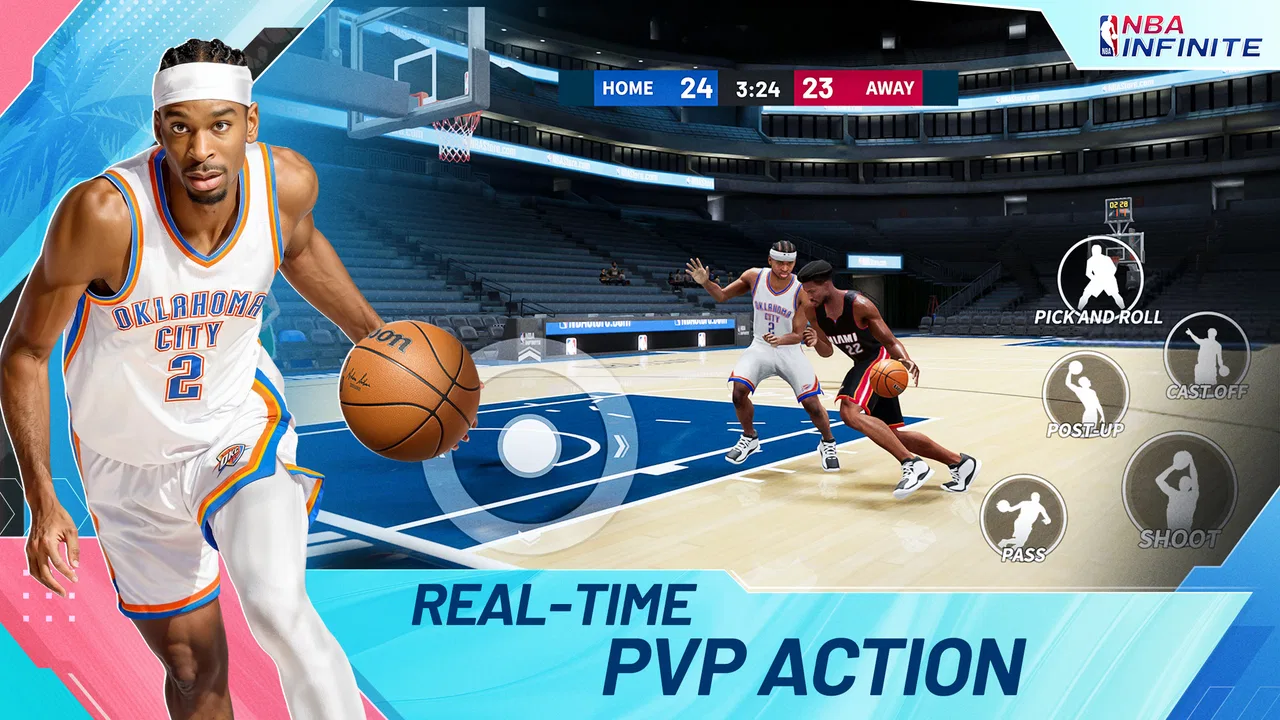
NBA Infinite - PvP Basketball is a dynamic mobile game that lets players engage in real-time basketball matches against others globally. With authentic NBA players and teams, it combines strategy and skill, offering a unique sports gaming experience on both Android and iOS platforms.
02How do I progress and improve in the game?
Progression in NBA Infinite involves participating in matches to earn experience points and rewards. Upgrading your players, unlocking new skills, and strategically managing your team are crucial for improvement. Daily challenges and events also offer opportunities to gain valuable resources and enhance your gameplay.
03Are there in-app purchases in NBA Infinite?
Yes, NBA Infinite offers in-app purchases that allow players to buy virtual currency, player packs, and other items to enhance their gaming experience. While the game is free to download and play, these purchases can accelerate progress and unlock exclusive content.
04Can I play NBA Infinite offline?
NBA Infinite requires an internet connection to access its PvP features and real-time multiplayer matches. While some aspects of the game might be available offline, the core experience and competitive elements necessitate being online to ensure smooth gameplay and matchmaking.
05What devices are compatible with NBA Infinite?
NBA Infinite is compatible with a wide range of Android and iOS devices. However, it’s recommended to check the specific system requirements on the Google Play Store or Apple App Store to ensure your device meets the necessary specifications for optimal performance.
Pros
- Realistic graphics enhance gameplay experience.
- Smooth
- responsive controls for quick moves.
- Wide range of customization for players.
- Engaging multiplayer modes with friends.
- Regular updates with new content and features.
Cons
- In-app purchases can be quite expensive.
- Requires a stable internet connection.
- Limited offline gameplay options.
- Occasional lag in multiplayer matches.
- Some features locked behind paywalls.

NBA Infinite - PvP Basketball
Gallery